
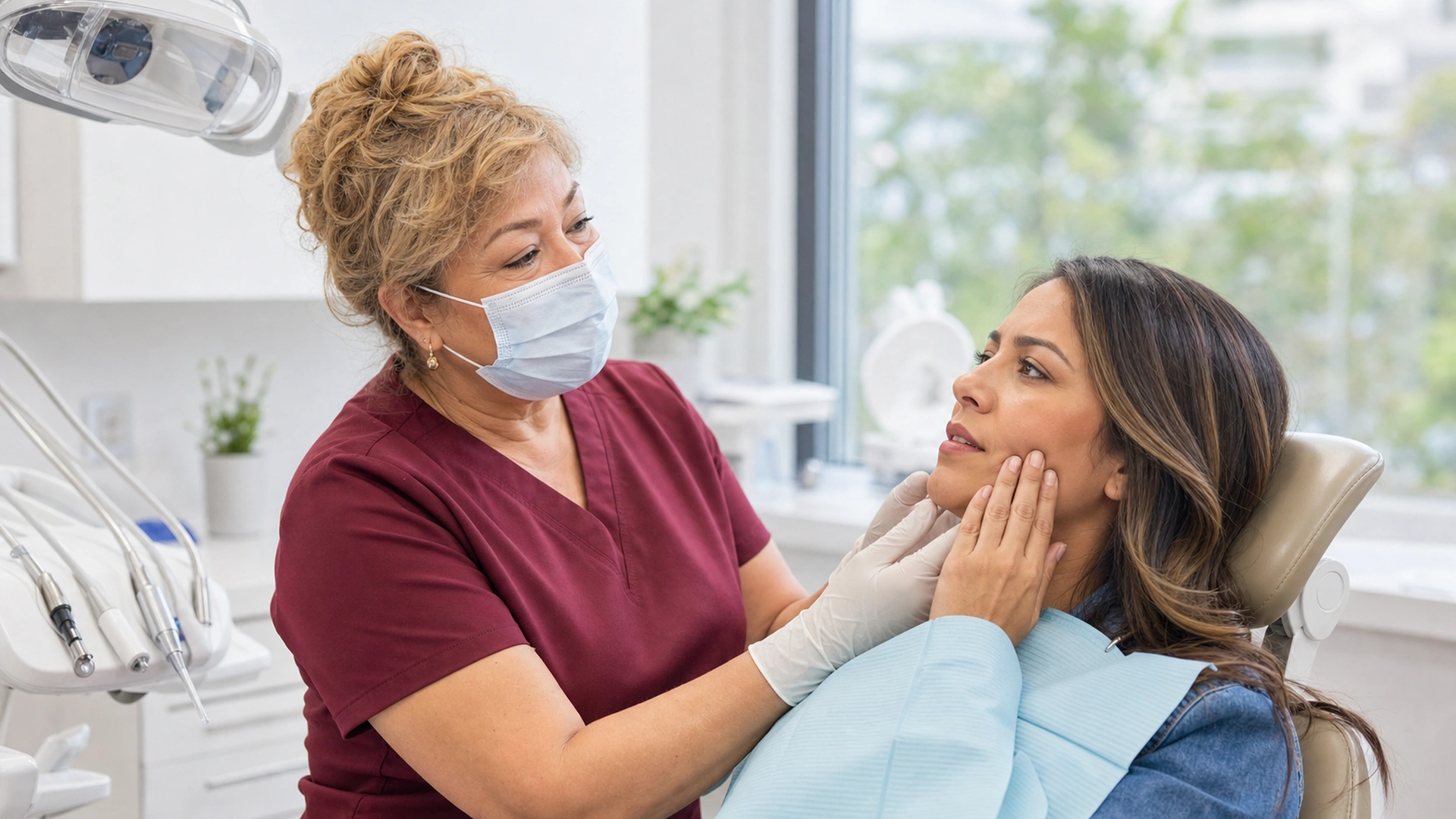
Oral Cancer Exams in El Monte, CA — A Simple Check for Your Peace of Mind
As part of your routine visit, Dr. Deisy Mon Morales performs a careful oral cancer screening to check for changes that may need a closer look, helping you stay informed about your overall oral health.
Oral Cancer Exams, A Quick, Thorough Screening
Changes inside the mouth can be easy to overlook, especially when they do not hurt. An oral cancer exam gives the dental team an opportunity to check the lips, mouth, throat, and nearby tissues for unusual findings that may need closer evaluation. It is a brief, non-surgical part of preventive dental care that can help bring attention to a concern before it becomes more noticeable.
United Dental Office provides oral cancer exams at 11912 Valley Blvd Ste A, El Monte, CA 91732. Our practice is located along the Valley Boulevard corridor near Mountain View Road, Mountain View Park, and the historic lion landmark at Valley Boulevard and Peck Road, with access from I-10 and I-605 for patients coming from South El Monte, Rosemead, Temple City, Baldwin Park, and other San Gabriel Valley communities.
What Does an Oral Cancer Exam Include?
An oral cancer exam is a systematic visual and hands-on assessment of areas where abnormal tissue may develop. The dentist checks more than the teeth and gums, looking carefully at the soft tissues inside and around the mouth.
The examination may include the:
- Lips and the skin immediately around the mouth
- Inner cheeks and gums
- Front, sides, and underside of the tongue
- Floor and roof of the mouth
- Back of the mouth and visible throat tissues
- Jaw and neck for unusual swelling or enlarged areas
Good lighting, a dental mirror, and gentle palpation help the dentist evaluate tissue color, texture, symmetry, and contour. This examination does not diagnose cancer by itself. Its purpose is to identify a change that may require monitoring, referral, or a biopsy by an appropriately trained clinician.
Changes the Dentist Looks For
Many mouth sores and tissue changes have causes unrelated to cancer. An ulcer may follow an accidental bite, for example, and irritation can develop near a rough tooth or dental appliance. A professional evaluation is still important when a change is unexplained, does not heal, or continues to return.
During an oral cancer exam, the dentist may look for:
- A sore, ulcer, or irritated area that persists
- Red, white, or mixed-color patches
- A lump, thickened spot, or firm area
- Unexplained swelling, bleeding, or tenderness
- A change in the surface or color of oral tissue
- Numbness or another unusual sensation in the mouth or lips
- Ongoing difficulty chewing, swallowing, speaking, or moving the tongue or jaw
- Persistent mouth or throat discomfort
Tell the dental team about any symptom you have noticed, even if it is not visible on the day of your appointment. The location, duration, and pattern of a change can help guide the evaluation.
Who Should Have an Oral Cancer Exam?
A conventional visual and tactile examination is an important part of comprehensive dental care for adults. People without known risk factors can still develop suspicious oral changes, so the absence of tobacco or alcohol use does not make an examination unnecessary.
Some patients may benefit from especially close attention because their risk can be influenced by:
- Cigarettes, cigars, pipes, chewing tobacco, or other tobacco products
- Frequent or heavy alcohol use, particularly when combined with tobacco
- Certain human papillomavirus, or HPV, infections associated with cancers of the throat
- A personal history of oral, throat, or other head-and-neck cancer
- Increasing age
- Repeated ultraviolet exposure involving the lips
- Betel quid or areca nut use
Risk factors do not confirm that cancer is present, and a person can develop oral cancer without an obvious risk factor. Share your health history and any tobacco, alcohol, or relevant exposure history honestly so the dentist can evaluate you with the right context.
What to Expect During Your Visit
The exam is generally quick and does not involve needles, drilling, or anesthesia. First, the dental team reviews changes in your health, medications, habits, and any symptoms involving your mouth or throat. The dentist then inspects the oral tissues and gently feels selected areas of the mouth, jaw, and neck.
If no concerning changes are found, the result can be documented as part of your ongoing dental record. If an area looks or feels unusual, the next step depends on its appearance and your history. The dentist may recommend reassessing it after a short interval, removing a possible source of irritation, or referring you promptly to a specialist for further evaluation.
Only a biopsy can establish whether suspicious tissue is cancerous. A referral is not a diagnosis; it is a careful next step intended to obtain the information needed for an appropriate decision.
Why Early Evaluation Is Important
Oral and throat cancers may not cause significant pain at first. Waiting for severe discomfort can allow an important change to go unchecked. Examining the soft tissues during dental care creates an opportunity to recognize abnormalities and arrange diagnostic follow-up when needed.
Prompt evaluation can help by:
- Establishing a record of the location and appearance of a tissue change
- Separating common irritation from findings that need additional attention
- Reducing delays when specialist care or biopsy is appropriate
- Giving patients clear instructions about what to monitor
- Supporting a more complete approach to oral and overall health
An oral cancer exam is not a substitute for medical evaluation. Contact a dental or medical professional if you develop a persistent sore, lump, unexplained bleeding, ongoing throat pain, or difficulty speaking, chewing, or swallowing rather than waiting for your next routine visit.
Oral Cancer Exams as Part of Preventive Dental Care
Preventive dentistry should include attention to the tissues that support and surround your teeth. An oral cancer exam complements a dental evaluation by expanding the focus to the lips, tongue, cheeks, floor of the mouth, throat, jaw, and neck.
At United Dental Office, our goal is to make the process understandable and respectful. You can expect an explanation of what is being examined, an opportunity to describe any changes you have noticed, and straightforward guidance if a finding needs follow-up. No screening method can rule out every disease, but a careful examination and appropriate response to suspicious tissue are meaningful parts of responsible dental care.
Schedule an Oral Cancer Exam Near Valley Boulevard
Request an oral cancer exam at United Dental Office, 11912 Valley Blvd Ste A, El Monte, CA 91732. Our Valley Boulevard location is near Mountain View Road, Mountain View Park, the Valley Boulevard–Peck Road lion landmark, and regional routes I-10 and I-605. We welcome patients from El Monte, South El Monte, Rosemead, Temple City, Baldwin Park, and surrounding San Gabriel Valley neighborhoods seeking attentive preventive dental care.
If you have noticed a persistent change in your mouth or are due for a dental evaluation, contact United Dental Office to request an appointment. The dental team can examine the area, explain the findings, and help coordinate the appropriate next step when additional evaluation is needed.