
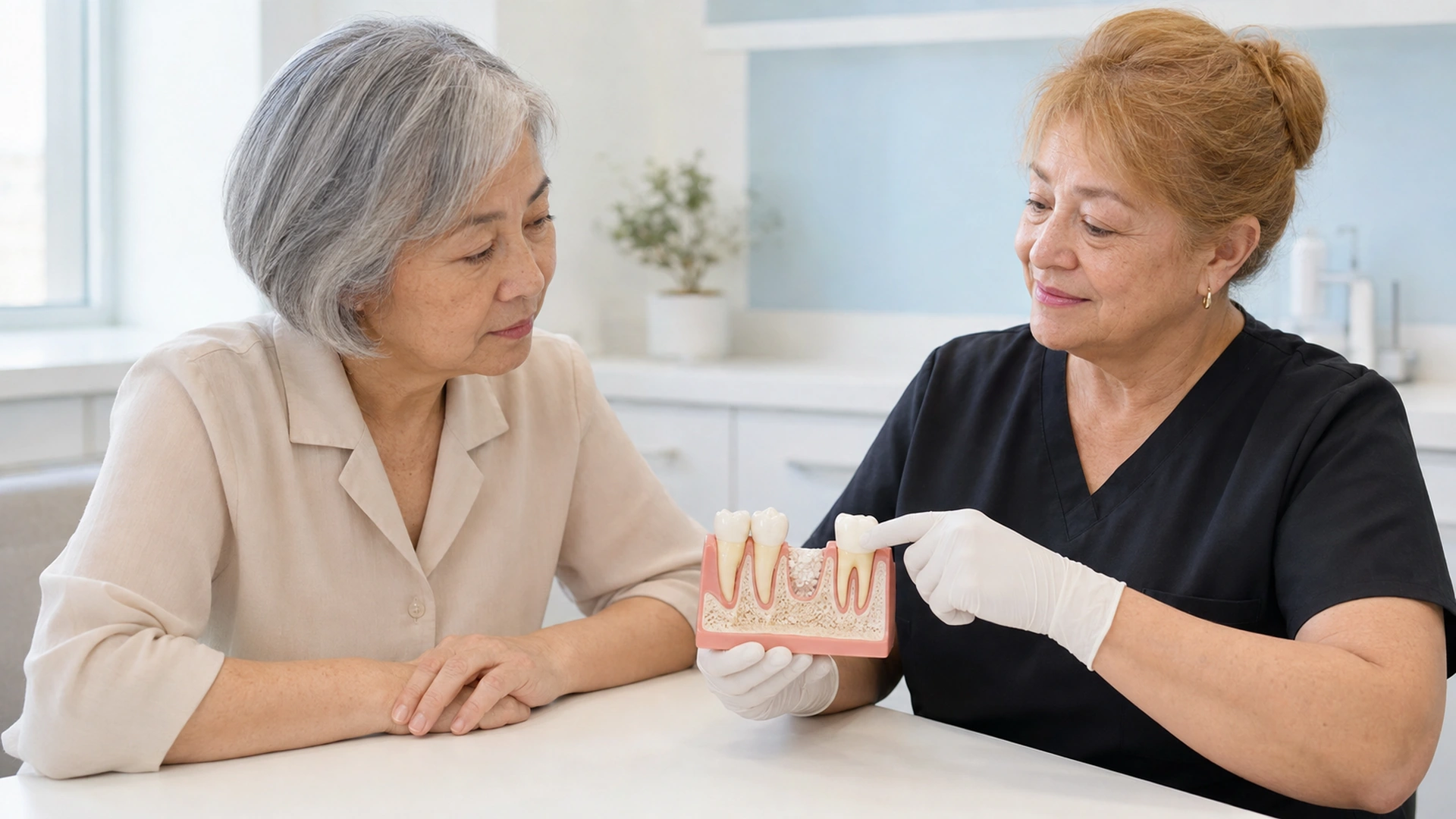
Bone Grafting in El Monte, CA — Rebuilding a Stronger Foundation
When jawbone has narrowed after tooth loss, bone grafting can restore the volume needed to support a dental implant. Dr. Deisy Mon Morales and our team plan each graft with care to protect your comfort and your future smile.
Bone Grafting in El Monte, CA: Rebuilding a Stronger Foundation
The jawbone provides essential support for the teeth and for many types of restorative dental care. When part of that bone becomes too thin or loses height, replacing a missing tooth may require an additional step. Bone grafting adds material to a selected area so the body can develop new bone around it during healing.
United Dental Office provides bone grafting evaluations at 11912 Valley Blvd Ste A, El Monte, CA 91732, inside Plaza Del Valle near Mountain View Road and Garvey Avenue. Our San Gabriel Valley office is accessible from South El Monte, Rosemead, Temple City, Baldwin Park, and West Covina through local routes such as Valley Boulevard, I-10, and I-605.
Why Jawbone Can Diminish After Tooth Loss
Tooth roots help transfer the forces of chewing into the jaw. After a tooth is removed or lost, the ridge in that area no longer receives the same stimulation and may gradually change in width or height. The longer a space remains without a tooth, the more important it may be to evaluate the available bone before planning an implant.
Loss of bone can also be associated with periodontal disease, infection, injury, or an existing defect in the jaw. Because these changes are often not obvious when looking in the mirror, a dental examination and appropriate imaging are needed to understand the shape and volume of the bone beneath the gums.
What a Dental Bone Graft Does
A dental bone graft places grafting material where additional bone support is needed. Depending on the treatment plan, the material may fill an extraction socket, rebuild a narrow ridge, or add volume around a future implant site. It can act as a framework that supports the body's bone-forming process as the area heals.
Grafting materials may be obtained from different sources, including processed donor material, animal-derived material, synthetic material, or the patient's own bone. A membrane may also be used in some procedures to protect the site during early healing. The recommended material and technique depend on the size and location of the defect, the planned restoration, and the patient's health history.
When Bone Grafting May Be Recommended
Bone grafting is not automatically necessary for every missing tooth or dental implant. It may become part of a personalized treatment plan when an examination shows that the existing jawbone does not provide the volume needed for the proposed care.
A dentist may discuss grafting when:
- A tooth is being removed and preserving the socket may support future treatment
- A missing-tooth site has become too narrow or shallow for planned implant placement
- Periodontal disease has damaged bone around a tooth
- Bone volume has been affected by infection, injury, or a previous procedure
- The contour of the dental ridge needs improvement before restorative treatment
- A defect near an existing implant requires further evaluation and possible repair
The purpose of an evaluation is to determine whether a graft is appropriate, whether another option would be more suitable, and when each stage should occur.
Planning Bone Grafting for a Dental Implant
Dental implants rely on surrounding bone for support. Before recommending implant placement, the dental team reviews the gums, bite, medical and dental history, location of nearby anatomical structures, and the dimensions of the jawbone. Diagnostic images help show whether the intended site can support an implant or would benefit from augmentation.
In some situations, graft material can be placed when a tooth is extracted or when an implant is inserted. In other cases, the graft needs a separate healing period before implant treatment can move forward. The sequence is based on the amount of bone present, the condition of the site, and how the tissues respond—not on a single timeline used for every patient.
What Happens During the Bone Grafting Process
Although the details vary, care commonly follows several planned phases:
- The treatment area is examined and diagnostic images are reviewed.
- The dental team explains the reason for grafting, the material being considered, available alternatives, and aftercare expectations.
- The area is numbed, and the grafting material is placed at the prepared site.
- When indicated, a protective membrane may be positioned before the site is closed.
- Follow-up visits are used to monitor the gums and the progress of healing.
- After adequate healing, the area is reassessed before the next restorative or implant stage.
Some grafts involve a small extraction socket, while others rebuild a larger section of the ridge. This difference can affect the procedure, recovery instructions, follow-up schedule, and the amount of time needed before the site is ready for additional care.
Comfort, Recovery, and Aftercare
Local anesthesia is used to numb the treatment area during the procedure. The dental team will review what you may feel afterward and how to care for the site based on the graft performed. Temporary tenderness or swelling can occur after oral surgery, but the type and intensity of symptoms vary.
Protecting the graft is important during early healing. Patients should follow their individualized instructions regarding oral hygiene, food choices, physical activity, medications, and follow-up visits. Avoid touching or disturbing the area, and contact the office if symptoms become worse instead of improving or if you have concerns about bleeding, swelling, fever, drainage, or the surgical site.
Smoking, certain medical conditions, and some medications can affect healing. Sharing a complete health history before treatment helps the dental team assess risks and tailor the plan appropriately.
How Long Does a Bone Graft Take to Heal?
Bone regeneration is gradual. The gums may settle before the graft has fully developed into a stable foundation beneath them, so feeling better does not necessarily mean the site is ready for an implant. Healing time depends on the type and size of the graft, its location, the patient's overall health, and the next stage of treatment.
Follow-up examinations and imaging may be recommended to evaluate the area rather than relying on a preset number of weeks or months. Once the site has healed sufficiently, the dentist can determine whether it is appropriate to continue with implant placement or another planned restoration.
Potential Benefits and Important Limitations
When clinically appropriate, bone grafting may:
- Rebuild width or height in an area affected by bone loss
- Preserve more of the ridge after a tooth extraction
- Create a more suitable site for future implant placement
- Improve support for a planned dental restoration
- Restore the contour of an area where bone has receded
- Expand treatment possibilities that limited bone might otherwise restrict
A graft improves the conditions for future care, but it does not guarantee that an implant can be placed or that every graft will heal in the same way. Results are influenced by the original defect, oral hygiene, health factors, tobacco exposure, and adherence to postoperative guidance. The consultation is the right time to review expected benefits, possible complications, alternatives, and the outlook for your individual case.
Personalized Surgical Care at United Dental Office
Questions about grafting are understandable, especially when it is one step within a larger treatment plan. United Dental Office emphasizes clear explanations so patients understand why a graft is being considered, how it relates to the final goal, and what needs to happen before proceeding. Recommendations are based on clinical findings rather than a one-size-fits-all approach.
If you have been told that you have insufficient bone, are considering a dental implant, or want to plan ahead after an extraction, an evaluation can clarify your options. Bring a current medication list and any questions you have so the dental team can review the complete picture with you.
Schedule a Bone Grafting Consultation Near Valley Boulevard
Visit United Dental Office at 11912 Valley Blvd Ste A, El Monte, CA 91732, in Plaza Del Valle near Mountain View Road, Garvey Avenue, and the familiar Valley Boulevard corridor. This El Monte location serves patients from South El Monte, Rosemead, Temple City, Baldwin Park, West Covina, and other San Gabriel Valley communities traveling by local streets or the nearby I-10 and I-605 freeways.
Schedule a consultation to learn whether bone grafting may support your implant, extraction, or restorative treatment plan.