
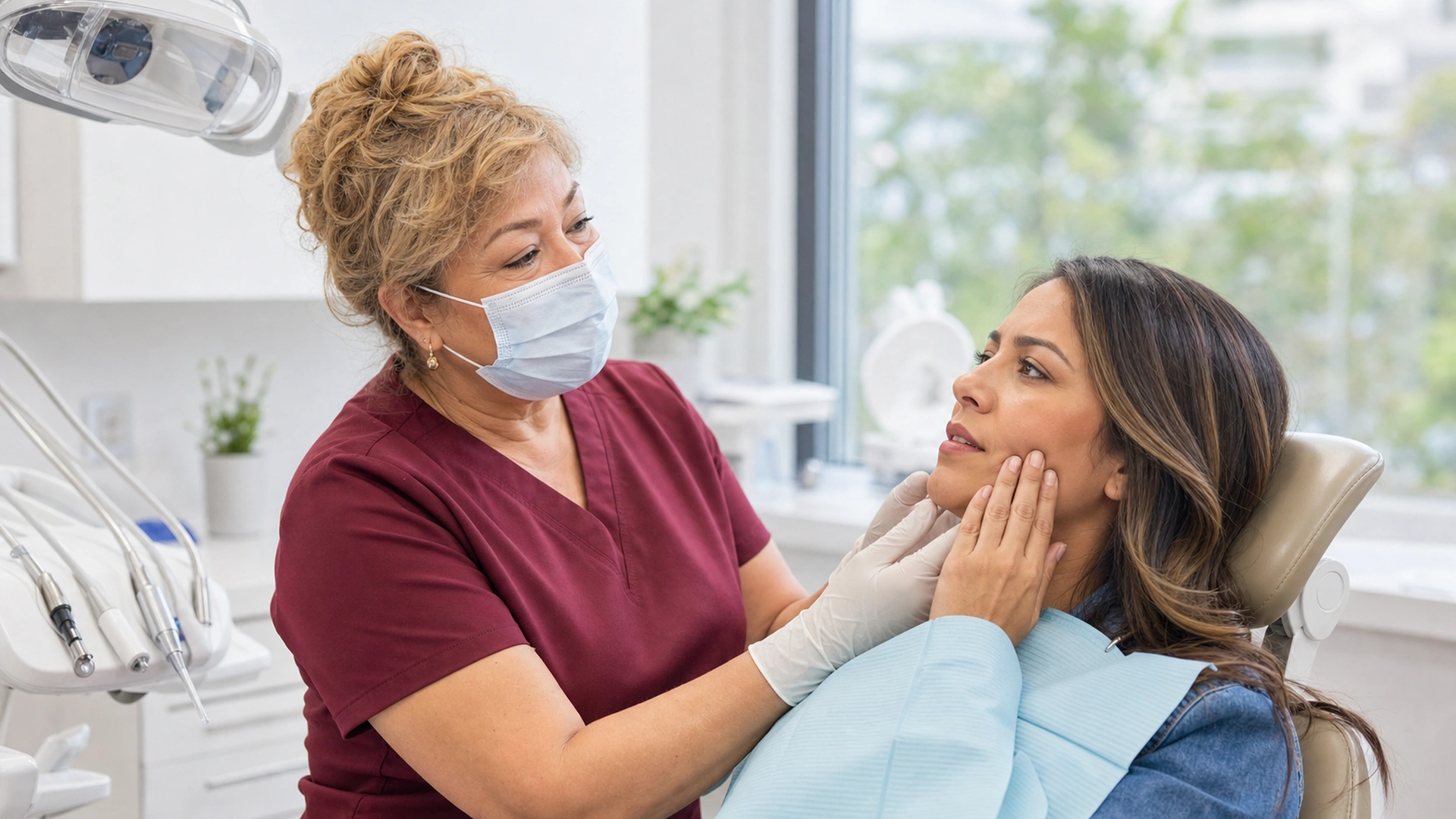
Dental Sealants in El Monte, CA — A Protective Shield for Hard-to-Reach Teeth
For children and adults alike, Dr. Deisy Mon Morales applies thin protective sealants that cover the deep grooves of back teeth, helping block food and bacteria from areas that are difficult to clean with brushing alone.
Simple Prevention for Deeper Grooves
The narrow grooves on back teeth can hold plaque and food even when someone brushes carefully. Dental sealants add a protective layer over these vulnerable chewing surfaces, helping make molars easier to clean and less likely to develop cavities.
United Dental Office provides dental sealants and personalized preventive care at 11912 Valley Blvd Ste A, El Monte, CA 91732. Our office is in Plaza Del Valle on the Valley Boulevard corridor near Mountain View Road, Mountain View Park, and the I-10, welcoming children, teens, and adults from South El Monte, Rosemead, Temple City, Baldwin Park, and surrounding San Gabriel Valley communities.
What Is a Dental Sealant?
A dental sealant is a thin material placed over the pits and fissures of a tooth. These natural depressions are most noticeable on molars and premolars—the back teeth used to grind food. Because some grooves are narrower than toothbrush bristles, bacteria and food particles can remain in them and contribute to decay.
Once the sealant flows into these grooves and sets, it forms a smoother surface that helps block cavity-causing plaque and acids. The coating is not a filling and does not require removing healthy tooth structure. Instead, it is a preventive measure intended to protect a tooth before more extensive treatment becomes necessary.
How Sealants Help Prevent Cavities
Sealants work by placing a physical barrier between the chewing surface and the substances that contribute to tooth decay. They are especially useful on permanent molars, where deep anatomy can make thorough brushing difficult.
Dental sealants may help:
- Protect hard-to-reach grooves on molars and premolars
- Reduce the chance of decay beginning on sealed chewing surfaces
- Make the back teeth easier to clean during daily brushing
- Preserve natural tooth structure by supporting early prevention
- Complement fluoride, regular cleanings, and consistent home care
Sealants protect only the surfaces they cover. Brushing with fluoride toothpaste, flossing between teeth, limiting frequent sugary snacks and drinks, and keeping recommended dental visits are still important for the rest of the mouth.
Who May Benefit from Dental Sealants?
Children often receive sealants after their permanent molars erupt. The first permanent molars commonly appear around age six, while the second set often arrives near age twelve. Applying a sealant after these teeth have come in can protect the chewing surfaces during years when brushing habits and food choices are still developing.
Sealants are not exclusively for children. A teen or adult with healthy unrestored grooves, a history of frequent cavities, or tooth anatomy that collects plaque may also be a candidate. In some situations, a dentist may recommend sealing a primary tooth or an early noncavitated area, depending on the patient's needs and cavity risk.
Before making a recommendation, the dental team examines the tooth for decay, existing restorations, moisture-control concerns, and other factors that may affect treatment. Not every tooth needs a sealant, so the decision is made individually.
What Happens During the Sealant Procedure?
Placing a sealant is a conservative in-office procedure that usually does not involve drilling or numbing. The tooth needs to remain clean and dry so the material can bond correctly.
A typical visit includes:
- Evaluating the tooth: The dentist checks the chewing surface and confirms that a sealant is appropriate.
- Cleaning and isolating the area: Plaque and debris are removed, and the tooth is kept dry.
- Preparing the enamel: A conditioning solution is placed briefly to help the sealant adhere. The tooth is then rinsed and dried again.
- Applying the material: The sealant is guided into the grooves in a thin layer.
- Setting the sealant: Depending on the material selected, a curing light may be used to harden it.
- Checking the result: The dental team examines the coverage and makes sure the bite feels comfortable.
The appointment is generally brief, although timing varies with the number of teeth being treated and the patient's individual needs.
How Long Do Dental Sealants Last?
Sealants can continue protecting teeth for years, but they are not permanent. Normal chewing can gradually wear the material, and a sealant may chip or lose coverage over time. During routine dental exams, the dentist can check whether each coating remains intact and determine if repair or replacement is appropriate.
Good home care helps support the teeth beneath and around the sealants. Continue brushing twice daily with fluoride toothpaste, clean between the teeth, and follow the preventive schedule recommended for you or your child. If a sealed tooth feels different, becomes sensitive, or causes discomfort, arrange an evaluation rather than waiting for the next routine visit.
Dental Sealants for Children, Teens, and Adults
For children, sealants can provide extra support as they learn to brush the back of the mouth effectively. Parents and caregivers should still supervise home care as appropriate because a sealant does not protect the sides of a tooth or the spaces between teeth.
Teens may benefit from sealants when newly erupted molars, orthodontic appliances, snacking patterns, or inconsistent brushing increase the likelihood of plaque buildup. Adults may be considered when susceptible chewing surfaces remain free of fillings and active cavitated decay.
Age alone does not determine whether sealants are useful. A dental evaluation considers each person's cavity history, enamel condition, tooth shape, existing dental work, diet, saliva flow, and ability to maintain the area at home.
Dental Sealants as Part of Preventive Dentistry
No single treatment prevents every cavity. Sealants are most effective as one part of a broader plan that may include dental exams, professional cleanings, fluoride exposure, digital X-rays when clinically appropriate, nutrition guidance, and a home-care routine tailored to the patient.
At United Dental Office, preventive recommendations are based on what the dental team sees during the examination. We explain which teeth may benefit, why treatment is being suggested, and what follow-up care may be needed so patients and parents can make informed decisions.
Request a Dental Sealant Evaluation Near Valley Boulevard
United Dental Office offers dental sealant evaluations at 11912 Valley Blvd Ste A, El Monte, CA 91732. The office is located in Plaza Del Valle near Mountain View Road, Mountain View Park, the Valley Boulevard–Peck Road corridor, and regional routes including I-10 and I-605. We serve families from El Monte, South El Monte, Rosemead, Temple City, Baldwin Park, and nearby communities across the San Gabriel Valley.
If you want to know whether sealants could provide useful protection for you or your child, contact United Dental Office to request an appointment. Our team can examine the chewing surfaces, review cavity risk, and recommend a preventive plan based on the patient's current oral health.