
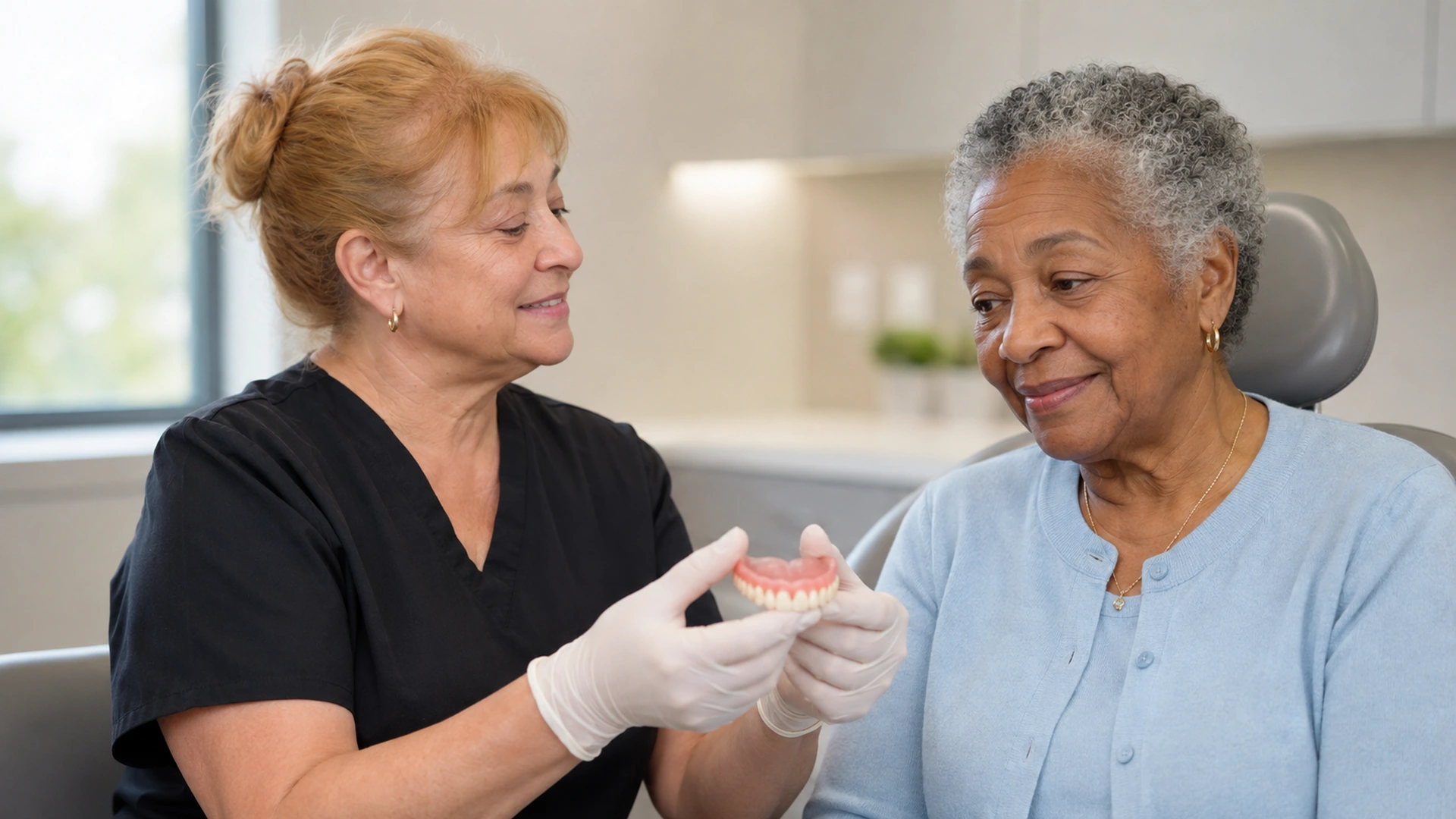
Dentures & Partials in El Monte, CA — Replace Missing Teeth with a Smile Designed Around You
Losing several teeth can affect chewing, speech, and confidence. Dr. Deisy Mon Morales and our team design removable dentures and partials that fit comfortably and restore everyday function with care and respect.
Replace Missing Teeth with a Smile Designed Around You
Losing several teeth—or all the teeth in one arch—can affect much more than appearance. Everyday activities such as chewing a meal, pronouncing certain words, or smiling in a photograph may begin to feel unfamiliar. Dentures and partial dentures offer a removable way to rebuild those missing areas and restore practical function.
At United Dental Office, your treatment begins with an evaluation of your mouth, remaining teeth, gums, bite, and personal concerns. The goal is to create a tooth-replacement plan that reflects your needs rather than relying on a one-size-fits-all approach.
What Are Dentures and Partial Dentures?
Dentures are removable dental appliances made to replace missing teeth and the nearby gum tissue. They are shaped for the individual patient and may be designed for the upper jaw, lower jaw, or both.
A complete denture replaces all teeth in an arch. It rests over the gums and is made to support chewing, speech, facial appearance, and the look of a complete smile.
A removable partial denture fills spaces left by multiple missing teeth when some healthy natural teeth remain. Depending on the design, the appliance may use a framework, clasps, or other connectors for support. The replacement teeth are selected and arranged to coordinate with the patient's mouth and existing smile.
Complete Dentures or Partials: Which Option Fits Your Needs?
The number and position of missing teeth are important, but they are not the only considerations. A dentist also evaluates the condition of the remaining teeth, the health of the gums, available support in the jaw, the way the upper and lower teeth meet, and the patient's priorities.
Complete dentures may be considered when no usable teeth remain in an upper or lower arch. A partial denture may be appropriate when several teeth are missing but other teeth can be preserved. In some situations, alternatives such as a dental bridge, dental implants, or an implant-retained denture may also be discussed. A clinical examination is needed to compare the benefits, limitations, care requirements, and treatment steps of each option.
Who May Benefit from Removable Tooth Replacement?
A denture consultation may be helpful if missing teeth are making it difficult to chew a varied diet, affecting speech, changing facial support, or causing self-consciousness about smiling. It may also be useful for someone who wants to understand removable options before deciding whether a surgical treatment is right for them.
Dentures are not limited to one age group, and tooth loss can happen for many reasons. What matters is the current health of your mouth and finding an appliance that is appropriate for your circumstances. Any active decay, gum concerns, damaged teeth, or sore tissue may need attention as part of the overall plan.
How Your Denture Is Planned
Comfort and function depend on careful planning. The process may include dental impressions or digital records, measurements of the jaws, an evaluation of the bite, and decisions about tooth shape and shade. These records help guide the laboratory work used to create the appliance.
Your dentist may also evaluate how the proposed teeth support the lips and face, how they appear when you smile, and how the bite comes together. Depending on the type of denture and the condition of the mouth, trial fittings may be used before the final appliance is completed. The exact sequence varies because healing needs, remaining teeth, and appliance designs are different for every patient.
What to Expect During the Denture Process
Your first visit focuses on understanding what is missing, what can be preserved, and what you hope to improve. After the examination, the dentist can explain suitable options and whether other dental care is recommended before fabrication begins.
Once the plan is established, detailed records are taken so the denture can be made for your mouth. Additional appointments may be needed to confirm the bite, evaluate appearance, and refine the fit. At delivery, the dentist checks how the appliance seats, how the teeth contact, and whether any areas require adjustment.
Follow-up is an important part of the process. A new appliance can place pressure on areas that were not accustomed to it, and small adjustments may make a meaningful difference in comfort. If a spot remains sore, the denture moves unexpectedly, or the bite feels uneven, contact the office rather than attempting to reshape the appliance yourself.
Getting Comfortable with New Dentures
Even a carefully made denture can feel unfamiliar at first. The tongue, cheeks, lips, and chewing muscles need time to learn how to work with the new appliance. Temporary changes in speech, saliva, or the sensation of fullness are possible during this adjustment period.
Many patients begin with softer foods cut into manageable pieces and chew slowly on both sides. Reading aloud can help the mouth practice words that initially sound different. Wear and removal instructions should come from your dentist because they may vary by appliance and treatment stage.
Progress is usually gradual. Persistent pain, repeated slipping, sharp pressure, or a sore that does not improve should be evaluated. These problems are not something you should simply tolerate, and denture adhesive is not a substitute for professional attention to an appliance that no longer fits properly.
Potential Benefits of Dentures and Partials
Replacing missing teeth may improve the ability to bite and chew, make some sounds easier to pronounce, and restore the appearance of a fuller smile. A denture can also help support the lips and cheeks, while a partial denture can fill visible gaps without replacing healthy teeth that can remain.
Results depend on the condition of the mouth, the type of appliance, fit, daily care, and the time allowed for adaptation. Dentures do not feel exactly like natural teeth, so realistic expectations are part of good planning. Our team explains both the advantages and the limitations so you can make an informed decision.
Daily Care and Long-Term Fit
Full and partial dentures collect food residue, plaque, and stains and should be cleaned every day. Use the cleaning method and products recommended for your appliance, rinse it thoroughly, and avoid hot or boiling water that could distort its shape. Your gums, tongue, palate, and any remaining natural teeth also require regular cleaning.
Unless your dentist gives different instructions, removable dentures are generally taken out while sleeping so the supporting tissues can rest. When the appliance is out of the mouth, store it as directed to keep it protected and prevent it from drying out.
Your mouth can change over time, which may alter the way a denture fits. Regular dental examinations remain important even if you have no natural teeth. Schedule an evaluation if the appliance becomes loose, begins clicking, causes recurring irritation, cracks, or has a damaged tooth. Store-bought glue and do-it-yourself adjustments can harm the appliance or your mouth.
Respectful Denture Care at Every Stage
Tooth loss can be a sensitive subject, and asking about dentures may feel like a major step. At United Dental Office, the conversation is centered on what you need now—not on judging how or when your teeth were lost.
You can expect clear explanations, time to ask questions, and a plan shaped around your oral health and comfort. Whether you are considering your first appliance, replacing an older denture, or looking for help with fit, the purpose of the visit is to identify practical next steps with you.
Dentures and Partials in El Monte and the San Gabriel Valley
United Dental Office provides consultations for complete dentures and removable partial dentures at 11912 Valley Blvd Ste A, El Monte, CA 91732. The office is in Plaza Del Valle at the Valley Boulevard and Garvey Avenue corridor, near Mountain View Road, with access from the I-10 and I-605 routes that connect communities throughout the San Gabriel Valley.
Our El Monte setting is convenient for patients coming from South El Monte, Rosemead, Temple City, Baldwin Park, La Puente, and West Covina, as well as neighborhoods around El Monte City Hall and the Valley Boulevard commercial district. If missing teeth or an uncomfortable existing denture are affecting your routine, request an evaluation to learn which replacement options may be appropriate for you.