
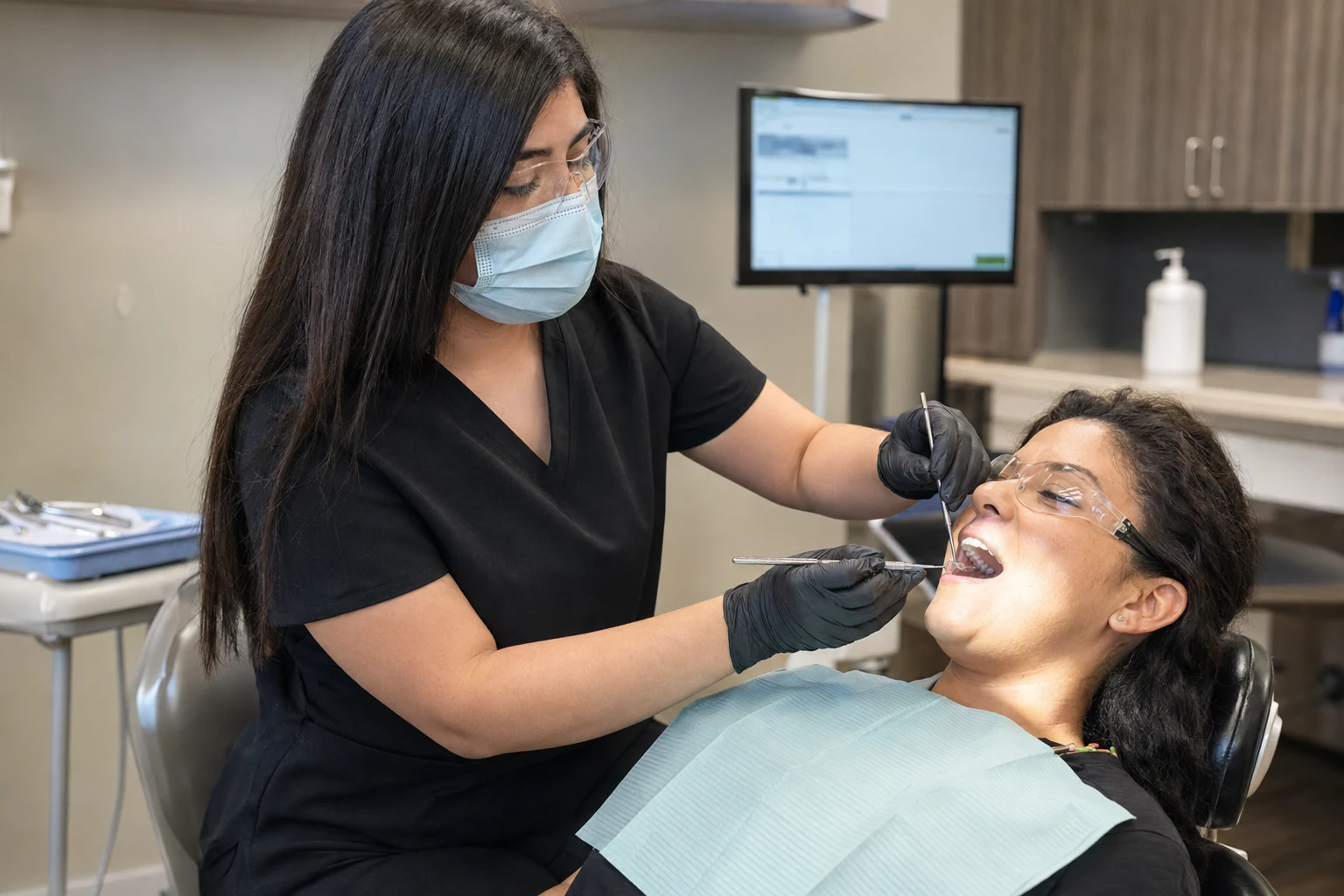
Simple & Surgical Extractions in El Monte, CA — Removing What Cannot Be Saved, Protecting What Can
When a tooth is severely damaged, infected, or unable to emerge normally, removing it may be the healthiest way to protect the rest of your mouth. Dr. Deisy Mon Morales and our team provide simple and surgical extractions with careful planning and clear explanations to keep you comfortable throughout your care.
Simple and Surgical Tooth Extractions
When a tooth is severely damaged, infected, broken, or unable to emerge normally, removing it may be the healthiest way to protect the rest of the mouth. United Dental Office provides simple and surgical tooth extractions with careful planning, clear explanations, and attention to patient comfort. Whenever possible, we first evaluate whether the natural tooth can be treated and preserved. If extraction is the appropriate option, we explain why it is recommended, what the procedure may involve, and how to care for the area afterward.
Our office is located at 11912 Valley Blvd Ste A, El Monte, CA 91732, in Plaza Del Valle where the Valley Boulevard corridor meets Garvey Avenue and Mountain View Road. This familiar San Gabriel Valley location is convenient for patients coming from El Monte, South El Monte, Rosemead, Temple City, Baldwin Park, West Covina, La Puente, and nearby communities using Valley Boulevard, I-10, or I-605.
What Is a Tooth Extraction?
A tooth extraction is the controlled removal of a tooth from its socket in the jaw. Although preserving natural teeth is generally preferred, a tooth may reach a point where a filling, crown, root canal, periodontal treatment, or another restorative approach cannot provide a predictable solution. In other situations, removal may be considered because a tooth is impacted, creates an infection risk, or needs to be addressed as part of a broader orthodontic or restorative plan.
An examination and dental X-rays help determine the tooth's condition, the shape and position of its roots, the surrounding bone, and its relationship to nearby structures. These findings allow the dentist to decide whether a simple extraction is appropriate or whether a surgical approach may be safer and more controlled.
What Is a Simple Extraction?
A simple extraction is generally used when the tooth has erupted through the gums and enough of its crown is accessible. After the area is thoroughly numbed, the dentist uses specialized instruments to loosen the tooth from the fibers that hold it in place and remove it from the socket.
Because the tooth can be reached directly, a gum incision is not usually required. The exact experience depends on the location of the tooth, the condition of the crown and roots, bone density, and other individual factors. Patients may notice pressure or movement during treatment even when the area is numb, and the dental team can pause or make adjustments if additional comfort support is needed.
What Is a Surgical Extraction?
A surgical extraction is used when a tooth cannot be removed predictably through a routine approach. This may be necessary when a tooth is trapped below the gum, partly covered by bone, fractured at or below the gumline, severely decayed, or positioned in a way that limits access.
Depending on the case, the dentist may make a small opening in the gum, remove a limited amount of surrounding bone, or divide the tooth into sections so each part can be removed with less stress on nearby tissue. The site is then examined and cleaned, and stitches may be placed when appropriate. Surgical does not automatically mean that a procedure will be difficult for the patient; it describes the additional access and technique required to remove the tooth safely.
When Might a Tooth Need to Be Removed?
No single symptom can confirm that an extraction is necessary. A clinical examination and appropriate imaging are needed because tooth pain, swelling, and sensitivity can have several possible causes. Extraction may be discussed when a patient has:
- Extensive decay that leaves too little healthy tooth structure for a dependable restoration
- A deep fracture or broken tooth that cannot be predictably repaired
- Infection that cannot be adequately resolved while keeping the tooth
- Advanced periodontal disease with substantial loss of supporting bone
- An impacted or partially erupted tooth that is causing disease or damaging a neighboring tooth
- Persistent problems around a wisdom tooth, such as pain, swelling, decay, or infection
- A retained root or tooth fragment below the gumline
- Severe crowding when removal is included in a coordinated orthodontic treatment plan
- A non-restorable tooth that interferes with a planned denture, implant, or other rehabilitation
The goal is not simply to remove a painful tooth. It is to identify the source of the problem, consider reasonable alternatives, and choose an approach that supports the patient's overall oral health.
How We Plan Simple and Surgical Extractions
Before treatment, the United Dental Office team reviews the patient's symptoms, dental history, health conditions, medications, supplements, allergies, and prior experiences with dental care. It is important to share complete health information, including the use of blood thinners or medications that can influence healing. Patients should not stop a prescribed medication unless the prescribing clinician and dental team provide specific instructions.
The dentist examines the tooth and surrounding gums and reviews the diagnostic images needed for the case. We then discuss the reason for the proposed extraction, whether it is expected to be simple or surgical, reasonable alternatives, potential risks, aftercare, and whether future tooth replacement should be considered. If a case requires care beyond what is appropriate in the office, referral to the suitable dental specialist may be recommended.
What Happens During a Tooth Extraction?
The details vary, but treatment commonly follows a careful sequence:
- The tooth, nearby tissues, and diagnostic images are reviewed before the procedure begins.
- Local anesthetic is used to numb the treatment area. The team confirms comfort before proceeding.
- For a simple extraction, the tooth is gradually loosened and lifted from its socket. For a surgical extraction, additional access may be created and the tooth may be separated into smaller sections.
- After removal, the socket is inspected and cleaned as needed. Bone grafting may be discussed or performed in selected cases when preserving the ridge could support a future restoration.
- Stitches may be placed for some surgical sites, and gauze is positioned to help control bleeding and support clot formation.
- Before the patient leaves, the team reviews personalized instructions for food, oral hygiene, activity, medications, and follow-up care.
The number and position of the teeth, the complexity of the roots, active infection, and the patient's health can all influence the procedure and recovery. For that reason, another person's extraction experience is not a reliable prediction of what a specific patient will need.
Comfort During Simple and Surgical Tooth Removal
Local anesthesia is used so the treatment area is numb during the extraction. Pressure, vibration, or movement may still be noticeable, but sharp pain should be reported immediately so the dentist can reassess the area. Patients who feel nervous about dental treatment are encouraged to tell the team before the procedure. Knowing what causes concern allows us to explain each stage, answer questions, and plan appropriate comfort measures within the patient's individual treatment needs.
Afterward, temporary tenderness, swelling, bruising, or light bleeding can occur. The amount varies between simple and surgical procedures and from one patient to another. Following the written instructions and contacting the office when something does not feel right are important parts of a safer recovery.
Aftercare Following a Tooth Extraction
A protective blood clot forms in the empty socket and plays an essential role in early healing. Disturbing that clot can delay recovery and contribute to dry socket, a painful complication in which the underlying bone becomes exposed. Follow the instructions provided for your specific procedure, which may include the following:
- Keep steady pressure on the gauze for the amount of time directed by the dental team.
- Avoid vigorous rinsing, forceful spitting, or drinking through a straw during the initial healing period.
- Do not smoke or vape, because tobacco and suction can interfere with blood flow and clot stability.
- Choose soft foods and chew away from the extraction site until it is comfortable and safe to advance your diet.
- Use a cold compress on the outside of the face in short intervals if recommended for swelling.
- Brush and floss the rest of the mouth carefully, but do not brush directly over the socket until instructed.
- Avoid strenuous exercise and heavy lifting for the period recommended by the dentist.
- Take prescription or over-the-counter medication only as directed and only when it is safe for you.
Do not place aspirin, alcohol, peroxide, or unapproved home remedies directly on the gums or extraction site. If you are unsure about an instruction, contact the office rather than experimenting with the healing area.
When to Contact the Dentist After an Extraction
Some soreness and minor oozing can be expected, but symptoms should generally become more manageable as healing progresses. Contact United Dental Office if bleeding is difficult to control, pain becomes severe or worsens after initially improving, swelling continues to increase, or you notice fever, pus, a persistent unpleasant taste or odor, medication problems, or another unexpected change.
Difficulty breathing or swallowing, rapidly spreading swelling, heavy uncontrolled bleeding, or another potentially life-threatening symptom requires emergency medical attention. Call 911 or go to the nearest hospital emergency department rather than waiting for a routine dental visit.
Options After a Tooth Is Removed
Not every extracted tooth needs to be replaced. Wisdom teeth and teeth removed to create orthodontic space, for example, may not require a substitute. When a functional tooth is lost, however, the open space can affect chewing, appearance, bite balance, and the position of neighboring teeth. Replacement planning may therefore be an important part of the extraction conversation.
Depending on the site, oral health, available bone, and personal goals, options may include a dental implant, a fixed bridge, or a removable partial denture. In selected cases, socket preservation or another bone-grafting procedure may be considered at the time of extraction to help maintain the ridge for future treatment. These options have different requirements, timelines, benefits, and limitations, so they should be evaluated as part of an individualized restorative plan.
Why Choose United Dental Office for an Extraction Evaluation?
Tooth removal is only one part of caring for a damaged or infected tooth. Patients also need a clear diagnosis, an opportunity to understand alternatives, realistic guidance about recovery, and a plan for what comes next. United Dental Office approaches simple and surgical extractions with careful evaluation and straightforward communication, helping patients make informed decisions without one-size-fits-all promises.
Our El Monte dental office welcomes patients from throughout the surrounding San Gabriel Valley, including South El Monte, Rosemead, Temple City, Baldwin Park, West Covina, and La Puente. Whether you have a broken tooth near the gumline, discomfort around a wisdom tooth, or a tooth that another provider has said may not be restorable, an evaluation can clarify whether treatment may preserve it or whether extraction should be considered.
Schedule a Tooth Extraction Consultation Near Valley Boulevard
Visit United Dental Office at 11912 Valley Blvd Ste A, El Monte, CA 91732, inside Plaza Del Valle near Garvey Avenue and Mountain View Road. The office is positioned along the Valley Boulevard corridor with access from the I-10 and I-605 routes used by patients across El Monte and neighboring San Gabriel Valley communities.
Schedule an evaluation for persistent tooth pain, a badly damaged tooth, swelling, or concerns about an impacted tooth. The dental team can examine the area, review the findings with you, and determine whether a simple extraction, surgical extraction, another treatment, or a specialist referral is the appropriate next step.